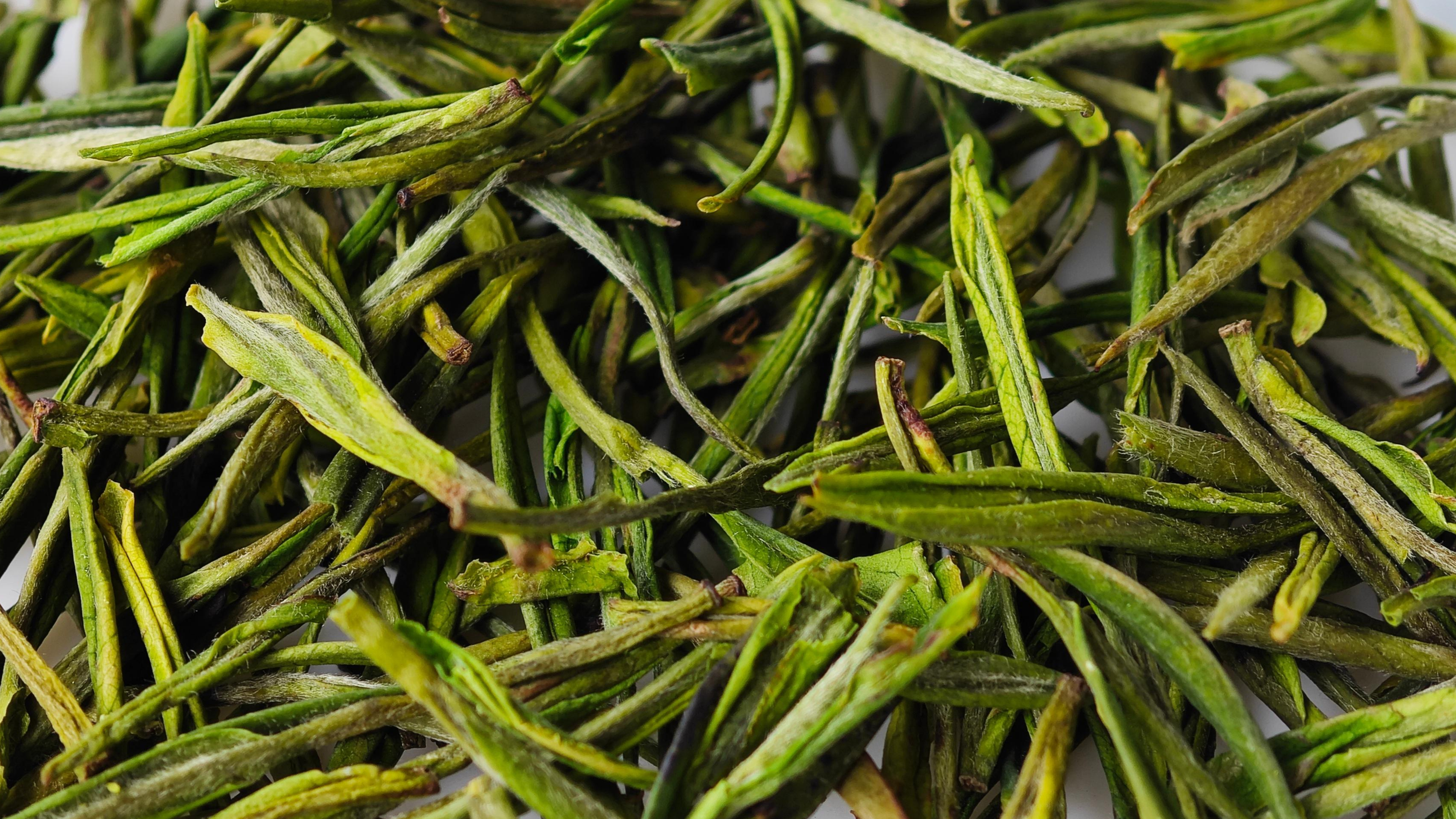
Anji White Tea (green tea)
Introduction
Anji White Tea, despite its name, belongs to the green tea category rather than the white tea family. Originating from Anji county in Zhejiang province, East China, this tea is renowned for its unique characteristics and limited harvesting period. It is derived from a special tea plant variety known as "White Leaf No.1," which is named for its temperature-sensitive whitening effect. The tender leaves of this tea transition from a slight green to a jade-like white color in early spring when temperatures are low, before eventually turning green as temperatures rise. Anji White Tea is not only rare and expensive due to its short harvesting period of about one month but is also celebrated for its rich content of theanine and amino acids, along with strong antioxidants that are beneficial for heart health.
History
The cultivation of Anji White Tea can be traced back to the 1980s when the Anji white tea cultivar was first discovered in Anji county. The tea has since gained recognition and popularity for its distinctive qualities and health benefits. Anji county, known as the "first bamboo town in China," has also become a major center of intangible cultural heritage in Zhejiang province, with Anji White Tea playing a significant role in the county's cultural and economic activities. The tea-making techniques of Anji White Tea, along with other related customs, were included on the UNESCO Representative List of the Intangible Cultural Heritage of Humanity, further emphasizing its cultural importance.
Cultivation
Climate and Soil Requirements
Anji White Tea requires specific climate and soil conditions for optimal growth. The region's temperate climate, characterized by moderate rainfall and distinct seasons, provides an ideal environment for the tea's cultivation. The soil in Anji county is rich in nutrients and well-drained, making it conducive to supporting the growth of the White Leaf No.1 variety.
Planting Techniques
The cultivation of Anji White Tea involves meticulous planting techniques. The saplings, originating from Anji's White Leaf No.1, are carefully planted and maintained to ensure high-quality tea production. In recent years, Anji has made efforts to support other regions by donating tea saplings, contributing to poverty alleviation initiatives. The tea trees are planted in rows, with sufficient spacing to allow for optimal growth and air circulation.
Characteristics
Appearance
Anji White Tea is distinguished by its unique appearance. In the early spring, the tea buds and leaves exhibit a jade-like white color due to the temperature-sensitive nature of the White Leaf No.1 variety. As the season progresses and temperatures rise, the leaves gradually transition to a deeper green hue. This transformation is a hallmark of Anji White Tea, capturing the essence of spring in its vibrant colors.
Aroma and Flavor
The aroma of Anji White Tea is delicate and refreshing, offering a pleasant sensory experience. Its flavor is characterized by a subtle sweetness and a smooth, mellow taste, making it a preferred choice for tea connoisseurs who appreciate nuanced flavors. The tea's unique flavor profile is attributed to its rich content of amino acids and theanine, contributing to a calming and invigorating experience.
Health Benefits
Anji White Tea is celebrated not only for its exquisite flavor and appearance but also for its numerous health benefits. The tea is rich in theanine and amino acids, which are essential for the body's proper functioning. The strong antioxidants present in Anji White Tea play a crucial role in maintaining heart health and bolstering the immune system. Regular consumption of Anji White Tea may contribute to overall wellness and vitality, making it a valuable addition to a healthy lifestyle.








